
How to find your lost pet
6
8
Visit EVERY shelter. Act fast and check each shelter daily.
1
Many pets are found farther than 10 miles from where they were lost.
Go in-person look for your pet—the description you give over the phone may not match someone else’s description of your pet.
Leave a lost pet report and current photo at all shelters you visit
Notify friends and neighbors that your pet is lost.
2
Text pictures and give details of where they were last seen.
4
9
National Platforms
Specialized
911ParrotAlert.com (birds only)
Colorado-Specific & Local
Your county/city animal shelter website directly
Local animal control / 311 website for your city
Tips
Post on multiple platforms at the same time
Check shelter websites daily since lost and found postings update frequently
Nextdoor and local Facebook groups tend to get the fastest community responses
You don't need a Ring device to use the Neighbors app
Check websites, social media, and apps
Contact the organization where you licensed and/or rabies vaccinated
Contact nearby veterinary practices
Leave an item of your clothing, your pet’s bedding or toys, or cat’s litter box outside to help guide your pet back home.
Leave an item of your clothing, your pet’s bedding or toys, or cat’s litter box outside to help guide your pet back home.
Check adoption pages regularly at local shelters.
Don’t give up! Pets can be found months after they’re lost.
If your pet has been missing for more than five days:
6
Your pet’s finders may be trying to contact you. Call the microchip company where your pet’s chip is registered to verify that your phone number and address are up-to-date in their records.
Hang flyers or posters
5
Hang flyers or posters in a 3-mile radius of the area your pet was last seen.
Check that your contact information is updated and alert them to your situation.
Contact veterinary practices in your area that may come across your lost pet
Immediately make sure your pet’s microchip contact information is up to date
3
Increase your odds of reunification
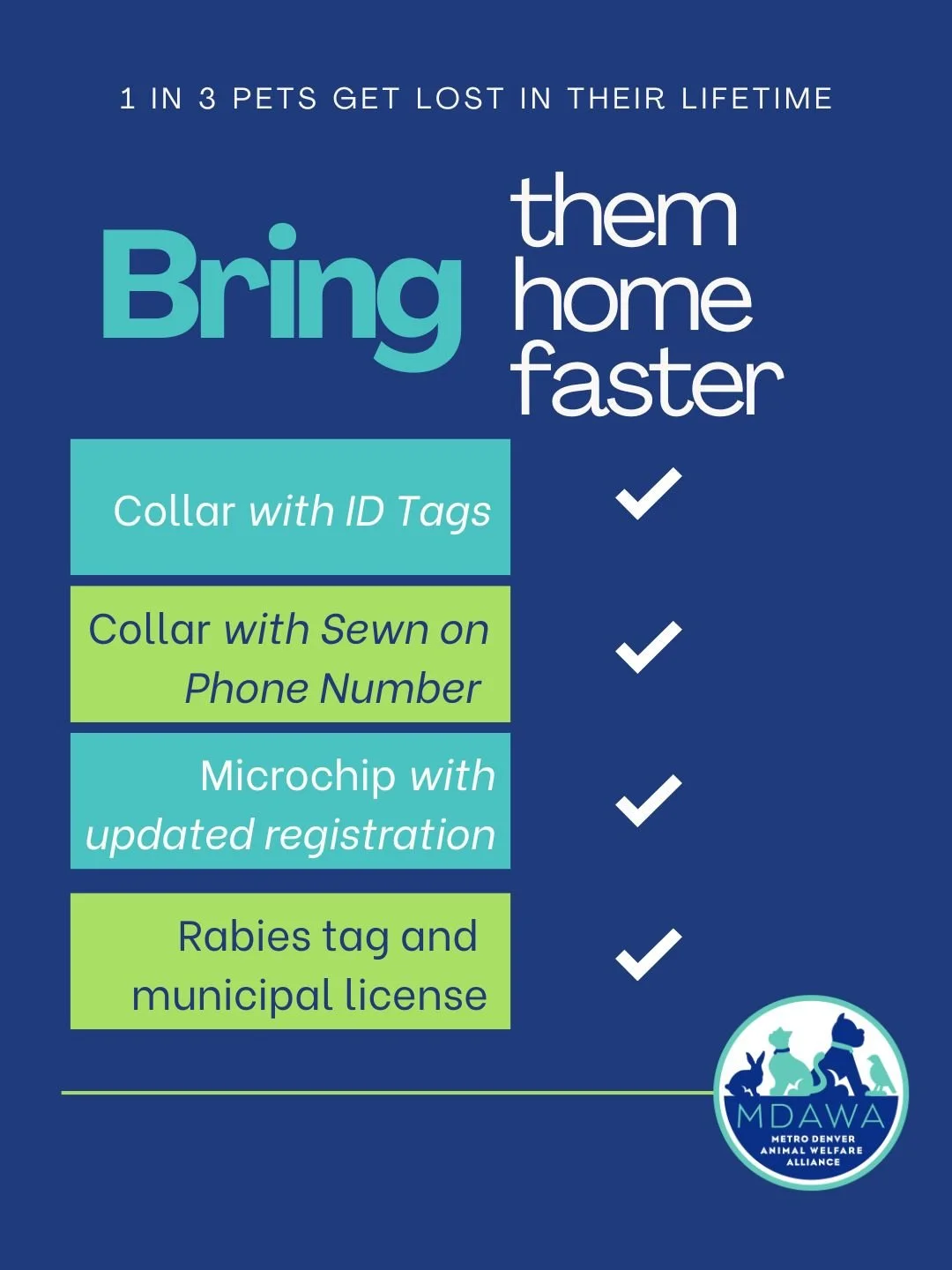
Always keep a collar with identification on your pet. Ensure your pet wears both an ID tag and their pet license. Keep in mind that collars can fall off or be removed, which is why layering multiple forms of identification is important.
Microchip your pet. A microchip is a harmless, rice-sized chip placed just under your pet's skin that holds a unique identification number. If your pet is found, a vet, shelter, or animal control officer can scan for the chip. Important: the chip itself is useless without registering it with a microchip registry (such as PetLink or 24Petconnect) and keeping your contact information current there.
License your pet with your municipality. Licensing gives animal control the ability to look up your contact information directly from your pet's license number, making it one of the fastest ways to get reunited if your pet is picked up.
Keep all your contact information up to date. This applies to your pet's ID tag, microchip registry, and license record. Your pet is only as traceable as your most current information.
Take regular, clear photos of your pet and consider a GPS tracker. Up-to-date photos are essential for creating lost pet flyers and social media posts. A GPS tracker (such as an Apple AirTag, Tile, or a pet-specific tracker) can also help you locate your pet in real time before they get too far.
Found a pet?
Did you find a stray or lost animal and aren’t sure how to help?
People who find lost pets can typically easily reunite them with their family by staying near where the animal was found or using social media.
Here are a few tips on how you can best help a lost animal find their way back home.
Found Pet Tips
#1
Check for tags and attempt to call the owner
Personal ID tag: Call the phone number or take the animal to the address listed.
Denver License/Pet Passport: Visit https://www.petdata.com/for-pet-owners/den/license-onlineand use the "Search a Tag" box.
Rabies tag: Call the clinic or shelter listed on the rabies tag.
#2
Bring the pet to your local municipal shelter.
Shelter staff will scan the pet for a microchip and review any tag information to attempt to reach the owner.
If you are unable to bring the pet to a shelter, get the animal scanned for a microchip at no cost at a local veterinary clinic. If the pet has a microchip, trace the number using the Universal Microchip Lookup Tool.
#3
If safety or health is an issue
If the pet needs medical attention and it is safe to transport them, take them to a veterinary clinic for treatment. If you are unable to do so, bring the animal to your local municipal shelter. If the animal cannot be safely transported, call animal control for the city where the pet was found.
#4
Post online
Fill out a found report to help owners find their missing pet: Submit a 24Petconnect report.
Post the pet's information and photo on 24Petconnect, Pawboost, Craigslist, NextDoor (in the neighborhood where the pet was found), and lost pet pages on Facebook.
#5
Search online lost pet posts
If contacting the owner has been unsuccessful, you can start searching the 24Petconnect database and social media for lost pets in your area.
#6
Check with neighbors and area veterinarians.
#7
Hang signs or posters in the neighborhood.
MDAWA Member Photo: Riverdale Animal Shelter